
The story of the last 15 years of computing was consolidation — bigger and bigger hyperscale data centers in a handful of mega-regions, with everything else feeding into them. The story of the next 15 years is going to look different. AI inference, real-time content delivery, latency-sensitive consumer experiences, regulated workloads, and increasingly visible carbon and water footprints are all pushing compute back outward — to the edge, in Tier 2 markets, closer to the users actually consuming the service.
This is the case for Edge AI colocation, and why a high-density, AI/HPC-ready facility in Murfreesboro, Tennessee — 30 miles from downtown Nashville, sitting on the Middle Tennessee population center — is the right shape of infrastructure for the next decade.
What “edge” actually means in 2026
In 2024 “edge computing” mostly meant micro-data-centers at the base of a 5G tower or in a telco closet. In 2026 it means something more useful: real colocation density in regional markets where the users live. Not hyperscale (millions of square feet, gigawatt power draws, drinking municipal water by the tanker). Not micro (one rack in a hardened cabinet next to a cell site). The right answer for most production AI and content workloads is in between: Tier 2 colocation with high-density rack support, modern power architecture, and a measurable latency advantage over the nearest hyperscale region.
Data Suites is built for exactly that profile.
Why streaming and content delivery are coming back to the edge
Netflix, YouTube, Disney+, Twitch, every major streaming service runs on a content delivery network architecture that pushes the actual video bytes as close to the user as physically possible. CDNs are an edge architecture. The encoders, the personalization layer, the recommendation models — those have historically lived deeper inside the network. That’s changing.
- Personalization is moving to the edge. Per-user transcoding decisions, per-user thumbnail selection, per-user ad insertion — these are now sub-second decisions that perform measurably better when the inference runs ~10–30 miles from the user rather than ~1,000 miles.
- Live streaming demands real-time encoding. Twitch broadcasters, Zoom keynote events, sports streaming — all benefit from an encoding tier within the same metro as the broadcaster.
- Regulatory data residency is creating a market for in-state colocation that hyperscale regions can’t satisfy without expensive sovereign-cloud workarounds.
Middle Tennessee is one of the fastest-growing streaming markets in the country. A facility 30 miles from Nashville’s population center, with high-density power and modern cooling, is the right shape of facility for that demand.
Why AI inference belongs at the edge — not the megacenter
The training of frontier AI models genuinely does belong in hyperscale facilities — the kind with 100MW+ contiguous power, large water access, and proximity to the cheapest available megawatts. That’s a real workload and we’re not arguing against it.
But inference — the act of actually running an already-trained model to answer a user’s question, classify a frame of video, or generate a personalized recommendation — is a completely different shape of workload:
- Latency-sensitive. A user waiting on an AI response feels 100ms vs 30ms. They don’t feel 500MW vs 5MW.
- Bursty. Inference traffic follows human attention curves — morning commute, lunch break, evening prime-time. Edge facilities can dynamically rack up density in regional markets without overcommitting one mega-region.
- Geographically tied. Local language models, local content moderation rules, local data residency — all argue for inference racks in the user’s state, not in Northern Virginia.
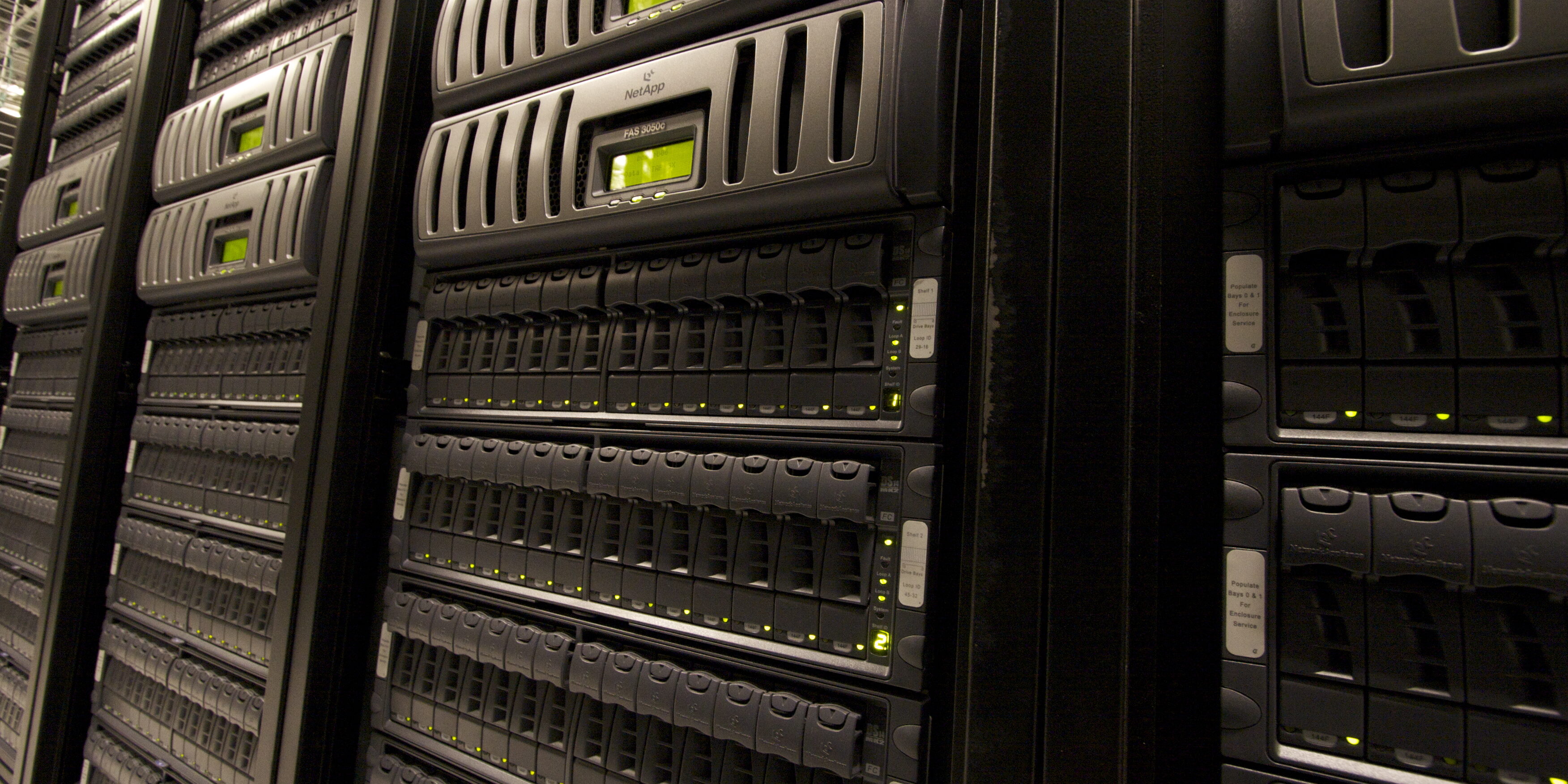
- Power-hungry per rack but small in aggregate. A single H100 / B200 / next-gen inference rack can pull 40–60kW. That’s where the Data Suites 50kW+ per-rack capability becomes the right tool for the job. You don’t need 100MW of hyperscale to host inference — you need 10 racks at 50kW each in the right metro.
The ecological argument: edge colocation has a smaller footprint per workload
Hyperscale data centers have become the public face of the AI energy and water debate — for good reason. A single hyperscale facility can pull tens of megawatts continuously, consume hundreds of millions of gallons of cooling water per year, and concentrate heat output in already-stressed regional grids. The pushback is mounting: Northern Virginia is rejecting new hyperscale permits, Arizona is rationing water connections, and several utilities are pausing data center interconnects entirely.
Edge colocation in Tier 2 markets has a structurally different profile:
- Smaller absolute draw per facility — single-digit to low-double-digit megawatts vs hundreds of megawatts
- Distributed across regional grids instead of concentrated in mega-regions, which spreads the load and avoids the single-grid-overload problem
- Closer to existing power infrastructure — Tier 2 metros already have the utility capacity that hyperscale regions are running out of
- Lower water consumption — modern high-density colocation with closed-loop or air-side cooling avoids the open-cooling water draw that’s becoming the most-criticized footprint of hyperscale
- Latency benefits per kWh — running an inference 30 miles from the user uses less network energy than running it 1,000 miles away; the long-haul fiber path itself costs energy
None of this is anti-hyperscale. Hyperscale is the right answer for training, batch processing, and storage-at-massive-scale. But for the long tail of latency-sensitive workloads — which is most of what end users actually experience — the right answer is fewer megawatts in more places.
Why Murfreesboro, Tennessee is the right edge for the Southeast
- 30 miles from Nashville — the major Southeast population center for Middle Tennessee, with sub-2ms latency to Nashville-based users on direct fiber
- Geographic redundancy from the Nashville colocation cluster — physically separated, different power feed, real disaster-recovery posture
- 50kW+ per rack high-density power — enough to host AI inference racks, GPU compute, and HPC workloads without the per-rack density compromises that plague legacy colocation
- 415V power architecture — modern efficiency design that reduces conversion losses vs traditional 208V facilities
- Tier 3-ready availability — concurrent maintainability, redundant power, suitable for production workloads
- Lower TCO than hyperscale cloud for inference workloads at scale — you own the racks, you own the GPUs, you control the destiny
- Customer service since 2016 — direct human relationships with the people who run the facility, not a ticket queue
Who Edge AI colocation in Tennessee is actually for
- AI inference platforms serving Southeast US users with sub-50ms latency requirements
- Content delivery + streaming companies placing encoder racks in the Middle Tennessee metro
- Regulated workloads requiring in-state data residency (healthcare, finance, government)
- Enterprise IT consolidating from cloud back into colocation as AI workloads make cloud TCO unworkable
- Disaster recovery for primary infrastructure in Nashville or Atlanta colocation clusters
- Research compute for the MTSU + Vanderbilt + Belmont + Lipscomb research ecosystem in Middle Tennessee
The shape of the next decade
The architecture of the next ten years is going to be: hyperscale for training, edge for everything else. The hyperscale buildout will continue, but the marginal megawatt is increasingly going to land in Tier 2 facilities near the users — facilities that already have the power, already have the cooling capacity, already have the local relationships, and don’t carry the regulatory or ecological controversies that mega-region hyperscale now faces.
Data Suites in Murfreesboro is exactly that shape of facility. AI-ready, HPC-ready, 50kW+ per rack, 415V efficiency, modular suite design, Tier 3-ready availability, and geographically positioned to serve the Middle Tennessee market and the broader Southeast.
If you’re planning the next phase of your inference, streaming, or regulated-workload infrastructure and the hyperscale answer is feeling wrong, the edge answer is right next to you. Get in touch.
Data Suites is a Tier 3-ready AI and HPC colocation data center in Murfreesboro, Tennessee. 50kW+ per rack, 415V power, modular suites from 1U to private cages. Serving Middle Tennessee enterprise + national customers since 2016.